
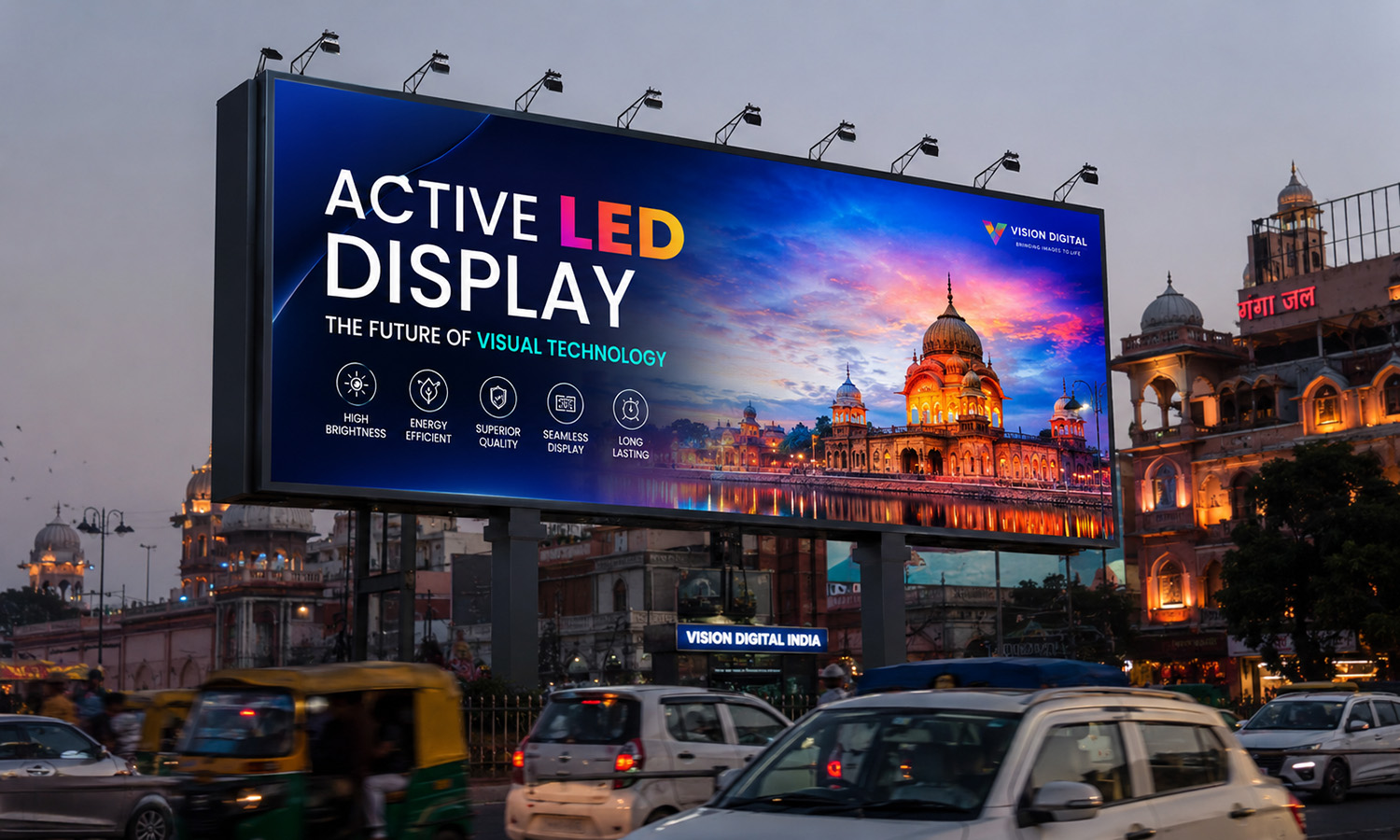
In today’s fast-paced digital world, businesses and organizations are constantly searching for innovative ways to capture audience attention. One technology that has transformed visual communication is the Active LED Display. Known for its exceptional brightness, energy efficiency, and superior image quality, active LED displays are widely used in advertising, entertainment, corporate environments, retail stores, stadiums, and public information systems.
As demand for immersive visual experiences continues to grow, active LED display technology is becoming the preferred choice for indoor and outdoor digital signage solutions. This article explores what active LED displays are, their benefits, applications, and why they are shaping the future of digital display technology.
What is an Active LED Display?
An Active LED Display is a display system that uses active matrix technology to control individual LEDs (Light Emitting Diodes). Unlike passive LED displays, where rows and columns are activated sequentially, active LED displays employ dedicated control circuits or transistors for each pixel. This allows for more precise brightness control, faster refresh rates, and superior image quality.
The technology enables displays to produce vibrant colors, sharp images, and smooth motion, making them ideal for high-definition content and large-scale visual presentations.
How Active LED Displays Work
Active LED displays operate using an active matrix structure where every pixel is individually controlled through thin-film transistors (TFTs) or integrated driver circuits. These transistors continuously maintain the brightness level of each pixel until updated.
This direct control mechanism provides several advantages:
- Higher refresh rates
- Improved color accuracy
- Enhanced contrast ratios
- Reduced motion blur
- Better power efficiency
As a result, active LED displays deliver crystal-clear visuals even in environments with high ambient light.
Key Benefits of Active LED Displays
1. Superior Image Quality
One of the primary advantages of active LED displays is their outstanding image quality. They offer deeper blacks, brighter whites, and vibrant colors that remain consistent across the screen. This makes them perfect for advertising displays, control rooms, and entertainment venues.
2. High Brightness Levels
Active LED displays can achieve significantly higher brightness levels than traditional LCD screens. This ensures excellent visibility even under direct sunlight, making them ideal for outdoor billboards and public displays.
3. Energy Efficiency
Modern active LED display systems are designed to consume less power while delivering exceptional performance. The individual pixel control minimizes energy wastage, helping businesses reduce operational costs.
4. Longer Lifespan
LED technology is known for its durability and longevity. Active LED displays often have operational lifespans exceeding 100,000 hours, reducing maintenance and replacement expenses.
5. Seamless Large-Scale Displays
Unlike conventional display technologies that require visible bezels, active LED panels can be seamlessly connected to create large video walls with uninterrupted visuals.
Applications of Active LED Displays
Digital Advertising
Advertising agencies and brands use active LED displays to create eye-catching digital billboards and promotional screens. Their high brightness and vivid visuals help attract more viewers and increase engagement.
Retail Stores
Retailers install active LED displays for product promotions, interactive displays, and in-store branding. Dynamic visual content enhances customer experience and drives sales.
Corporate Environments
Businesses utilize active LED displays in conference rooms, boardrooms, and reception areas for presentations, information sharing, and brand communication.
Sports Arenas and Stadiums
Large-scale active LED displays provide real-time scores, advertisements, instant replays, and event information, ensuring an engaging experience for spectators.
Transportation Hubs
Airports, railway stations, and bus terminals use active LED displays for schedules, announcements, and passenger information due to their reliability and visibility.
Entertainment Industry
Concerts, exhibitions, theaters, and live events rely on active LED displays to create immersive visual effects and engaging stage backgrounds.
Active LED Display vs Passive LED Display
When comparing active and passive LED technologies, active displays offer several significant advantages.
| Feature | Active LED Display | Passive LED Display |
|---|---|---|
| Brightness | High | Moderate |
| Refresh Rate | Faster | Slower |
| Image Quality | Superior | Basic |
| Power Efficiency | Better | Lower |
| Motion Handling | Excellent | Limited |
| Large-Scale Use | Ideal | Less Suitable |
Due to these advantages, active LED displays are increasingly replacing passive systems in professional and commercial environments.
Factors to Consider When Choosing an Active LED Display
Before investing in an active LED display, consider the following factors:
Pixel Pitch
Pixel pitch refers to the distance between adjacent pixels. Smaller pixel pitches provide higher resolution and better image clarity, especially for close viewing distances.
Indoor vs Outdoor Use
Outdoor displays require higher brightness levels, weatherproof construction, and enhanced durability compared to indoor displays.
Screen Size
Select the display size based on viewing distance, installation space, and intended application.
Resolution
Higher resolutions deliver sharper visuals and improved viewing experiences for audiences.
Maintenance Requirements
Choose displays with front-access or modular designs for easier servicing and maintenance.
Future Trends in Active LED Display Technology
The future of active LED displays looks promising with continuous advancements in display technology. Emerging trends include:
-
- MicroLED technology for ultra-high resolution displays
- Flexible and curved LED screens
- AI-powered content management systems
- Energy-efficient display solutions
- Interactive and touch-enabled LED displays
- Smart city integration for public communication networks
These innovations will further expand the applications and capabilities of active LED displays across various industries.
Conclusion
Active LED displays have revolutionized the way businesses, organizations, and public institutions communicate with audiences. Their exceptional brightness, superior image quality, energy efficiency, and versatility make them a valuable investment for modern digital signage and visual communication needs.
Whether used for advertising, corporate presentations, entertainment, or public information systems, active LED displays offer unmatched performance and reliability. As technology continues to evolve, active LED displays will remain at the forefront of next-generation visual solutions, helping organizations deliver impactful and engaging experiences.